Curriculum Statement
At East Boldon Infant School, we recognise the importance of Science in every aspect of daily life. As one of the core subjects taught in school, we give the teaching of Science the prominence it requires. We encourage our pupils’ natural curiosity of the world and teach the knowledge and enquiry skills to develop their understanding of the world.
- We aim to provide a high quality Science curriculum which will inspire and challenge our pupils by:
- Ensuring at all times pupils are aware of safe practices.
- Using focused exploration and investigation to develop scientific knowledge, understanding and skills.
- Developing an enquiring mind.
- Enabling pupils to communicate their observations and findings.
- Fostering respect and sensitivity towards the living and non-living environment.
- Promoting systematic approaches to scientific enquiries that help pupils to answer scientific questions about the world around them.
- Encouraging the pupils to work both collaboratively and independently.
Curriculum Intent
The planning for our Science curriculum is well sequenced, practical, creative and engaging.
Our teaching of Science offers opportunities to:
- To observe changes across the four seasons.
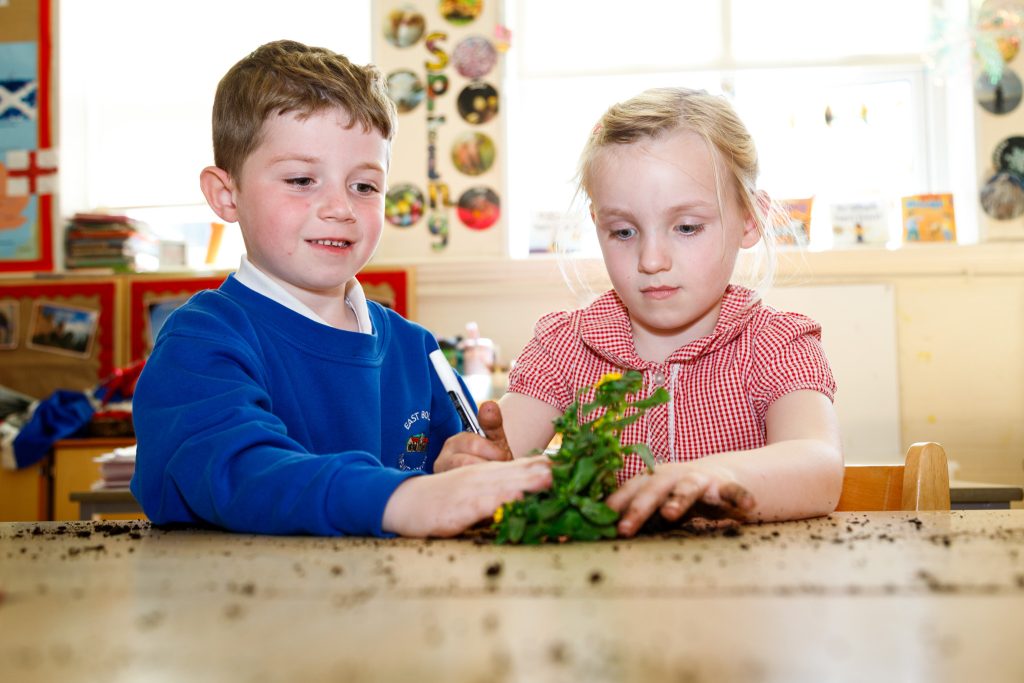
- To build upon the natural curiosity of the pupils through simple experiments.
- To develop the skills of asking and answering questions and making simple predictions.
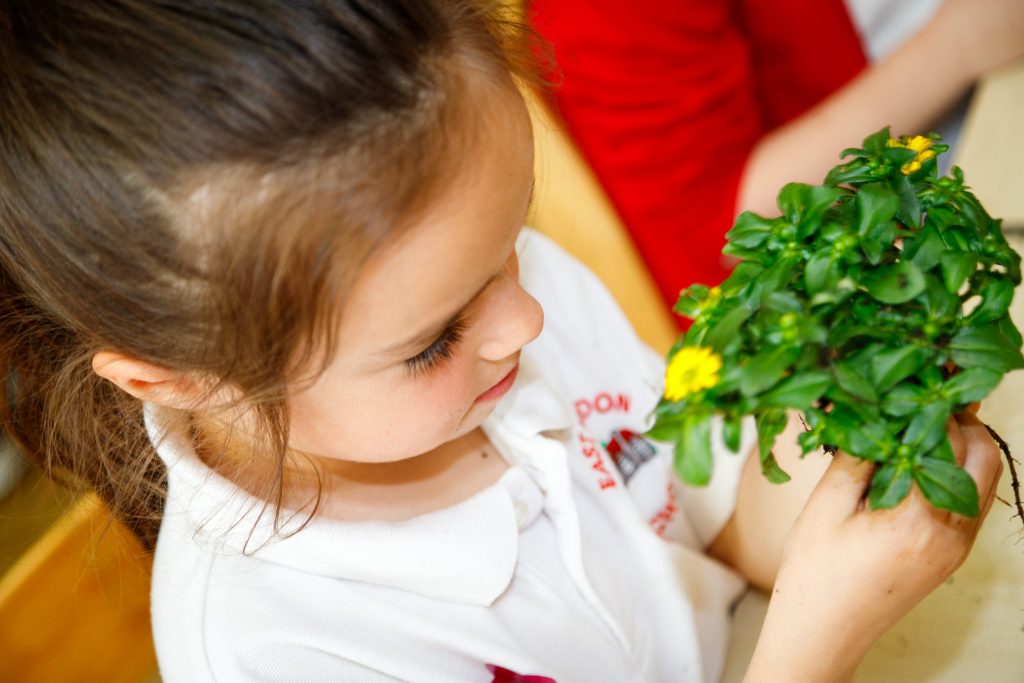
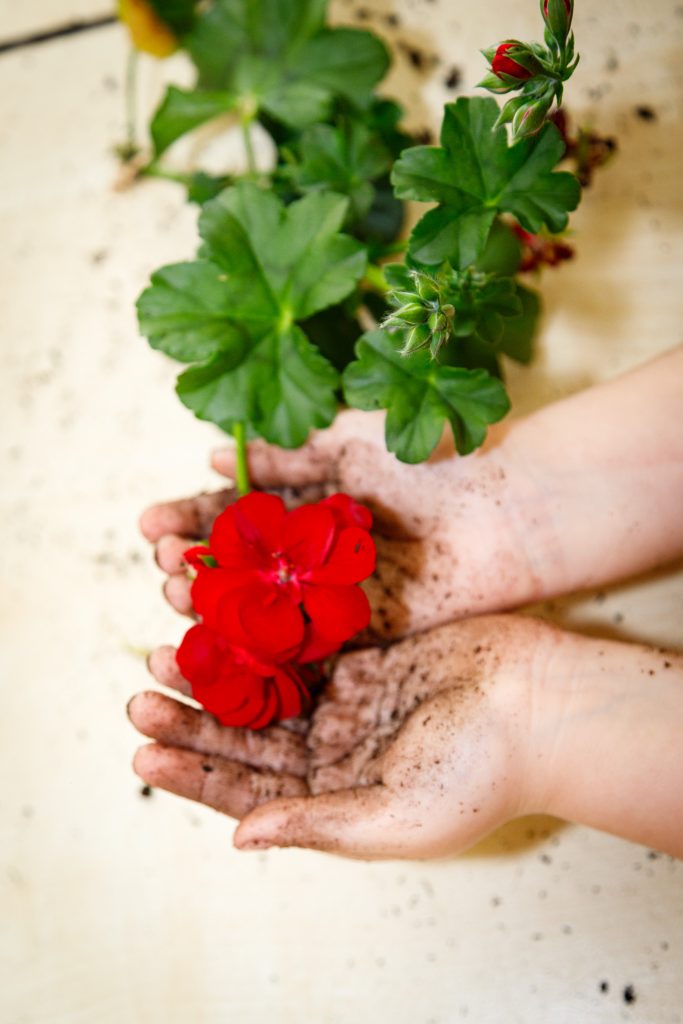
- To engage the children in practical first-hand experiences which enable them to treat living things and their environment with care and sensitivity.
- To develop ideas and scientific awareness through investigations and observations.
- To encourage pupils to present their findings through simple drawings, diagrams, tables, charts and in speech and writing.
- To provide a variety of differentiated learning experiences.
- To recognise hazards and risks when working with living things and materials.
- To know about materials, their properties and usage, the human body, animals and habitats, plants and trees.
- To make links between mathematics, science and technology.
Curriculum Implementation
Teachers create a positive attitude to science learning within their classrooms and reinforce an expectation that all children are capable of achieving high standards in science. Our whole school approach to the teaching and learning of science involves the following;
The Early Years curriculum is based around the Seven Areas of Learning set out in the EYFS. There is scientific content within the learning area Understanding the World, which is practical and often play-based.
Science in the reception classes is taught as an integral part of the topic work covered during the year. Each topic starts with a Prime Learning Challenge which is expressed as a question, for example; ‘What do seeds need to grow?’ Observation of children’s interests and activities also informs planning and provision for this area of learning.
Scientific learning occurs through:
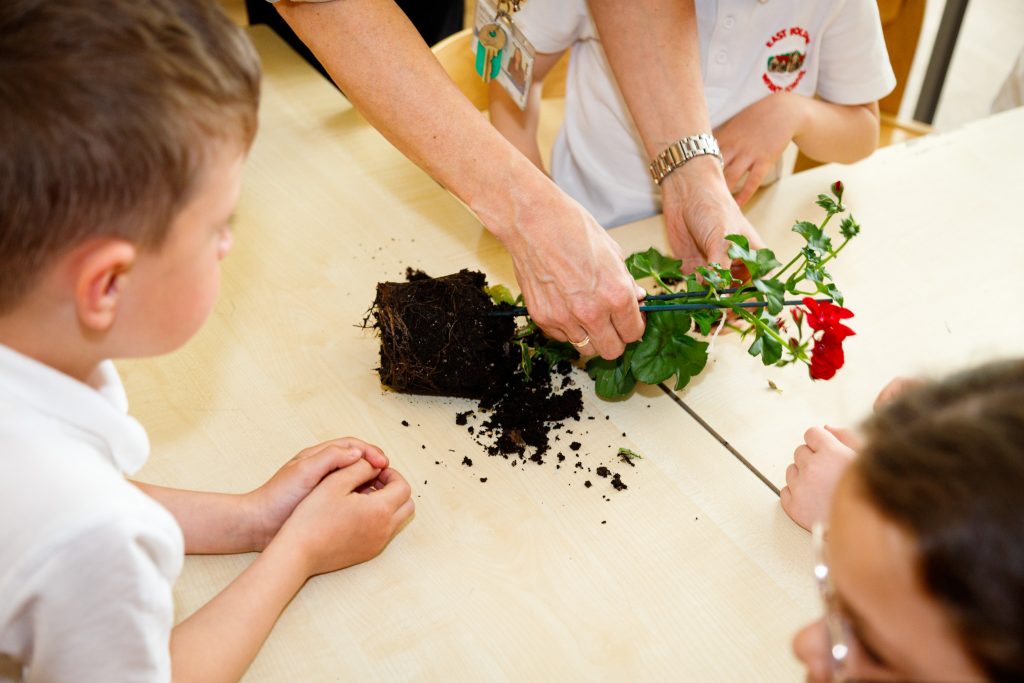
- Access to a range of developmentally appropriate practical activities based on first hand exploratory experiences. For example, a nature walk, magnifiers to explore natural objects, manipulating wet/dry sand etc;
- Enthusiastic and meaningful interaction with adults, who provide opportunities to develop communication skills, use correct scientific language and carefully framed open-ended questioning techniques to develop thinking skills;
- Exploration of both indoor and outdoor environments linking all areas of learning;
- Recognition and extension of their existing knowledge and understanding gained from their home setting.
Children are encouraged to –
- Be active learners and involved in a range of physical experiences, which allow them to take charge of situations.
- Take the initiative in developing their own ideas and approaches to an activity.
- Be involved in talk between themselves as well as adults.
- Build their confidence not only in science, but also in the management of their own activity and involvement with others.
- Develop as emergent thinkers not only in science, but also in Mathematics and Communication and Language.
The science based activities in reception provide the foundation for progressing to the scientific concepts covered in Year 1 and Year 2.
In Key Stage 1 the science curriculum is planned through the use of thematic topics which are outlined in the scheme of work.
As part of our Learning Challenge Curriculum, each topic starts with a Prime Learning Challenge which is expressed as a question. All year groups have a breakdown of knowledge, skills and understanding to be taught for each subject and this ensures that progression is built upon from the previous year’s learning so that there is an increasing challenge for the children as they move through the school. We start all new learning challenges with a pre- learning task to assess children’s prior knowledge before planning any subsidiary learning tasks. This also ensures that any gaps in learning can be addressed. The subsidiary learning tasks are also expressed as questions
A variety of teaching methods and stimuli will be employed to enable us to achieve our aims and objectives. They will be matched to the abilities and interests of the children and will include:
- Whole class teaching
- Group activities
- Individual/partner work
- An investigation area/seasonal display set up in each classroom
- Plenary sessions (reporting back)
- Using materials from other science schemes of work as appropriate
There is no specialist teaching in science, it is taught by the class teachers in all year groups.
We follow the National Curriculum programme of study for science, accessing activities from other published schemes as and when appropriate.
Activities are challenging, motivating and extend pupils’ learning. Lessons make effective links with other curriculum areas, especially English, Mathematics and ICT.
Activities inspire the pupils to experiment and investigate the world around them and to participate in a range of activities. These include:
- asking questions;
- locating sources of information;
- observation and discussion;
- selecting appropriate equipment and using it safely;
- planning investigative work;
- investigation;
- raising ideas and prediction;
- testing;
- handling and collecting evidence, measuring and checking results;
- making comparisons;
- describing patterns;
- communicating results and findings.
Curriculum Impact
The successful approach at East Boldon Infant School results in a fun, engaging, high-quality science education, that provides children with the foundations for understanding the world. So much of science lends itself to outdoor learning and so we provide children with opportunities to experience this. Through various workshops and trips a children have the opportunity to extend their learning through first hand experiences. Pupil voice is used to further develop the Science curriculum, through questioning of pupil’s views and attitudes to Science to support the children’s enjoyment of science and to motivate learners.
Teachers will assess children’s work in science by making informal judgements through observations during lessons. On completion of a piece of work, the teacher assesses it, and uses this assessment to plan for future learning. Written or verbal feedback is given to the child to help guide his/her progress.
Children are assessed at the end of each strand of work to determine progress against expected levels of achievement. We have sufficient resources for all science teaching strands in school. We keep these in a central store, where there is a box of equipment for each strand. Science topic books and computer software are available to support children’s individual research.
Evidence Me may be used to evidence practical elements of the science curriculum.
Monitoring of Science will be carried out in line with our monitoring programme for school. Monitoring will include:
- Lesson observations
- Scrutiny of children’s work and planning
- Tracking of pupil progress
- Use of Assessment Data
- Discussions with pupils – Pupil Voice
- Discussions with staff – Staff Voice
- Monitoring of subject development plans by subject leads
- Link governor visits
Monitoring will in particular include focus on:
- The lowest 20% of children
- The Pupil Premium children
- The SEND children
- Effective challenge
- Timely adapting to the needs of the children
- Effective use of resources
- Engagement and focus of the children
- Specific areas linked to the School Improvement Plan
- Wider Opportunities:
Eco-Schools
We are proud to be an Eco-School. This awarded to us for our ongoing work in school to make our children environmentally aware. We have an Eco-Warriors group who meet regularly with staff members to discuss ongoing issues and also meet with the co-ordinator from Groundworks. They have been instrumental in organising clothing collections, plastic aware schemes as well as walk to school initiatives.
- Curriculum Planning docx87.9 KbJan 21st, 2026

- Learning Journey KS1 ppt971.0 KbJan 21st, 2026
- Progression Map docx53.0 KbJan 21st, 2026
- Science Curriculum Statement.pdf pdf64.5 KbFeb 17th, 2026
- Science learning journey KS1.pdf pdf241.5 KbFeb 17th, 2026
- SCIENCE planning.pdf pdf168.2 KbFeb 17th, 2026
- Science Progression Map.pdf pdf80.3 KbFeb 17th, 2026
- Science pupil voice.pdf pdf78.1 KbFeb 17th, 2026