Curriculum Statement
Our History curriculum enables our children to gain knowledge and understanding of the past within our own locality, our country and the wider world. They will learn about the past and gain knowledge from different historic periods as well as developing an understanding of historical terms and vocabulary. This History curriculum at East Boldon Infant draws from and makes full use of the immediate and wider local areas, enabling children to develop a history of their locality.
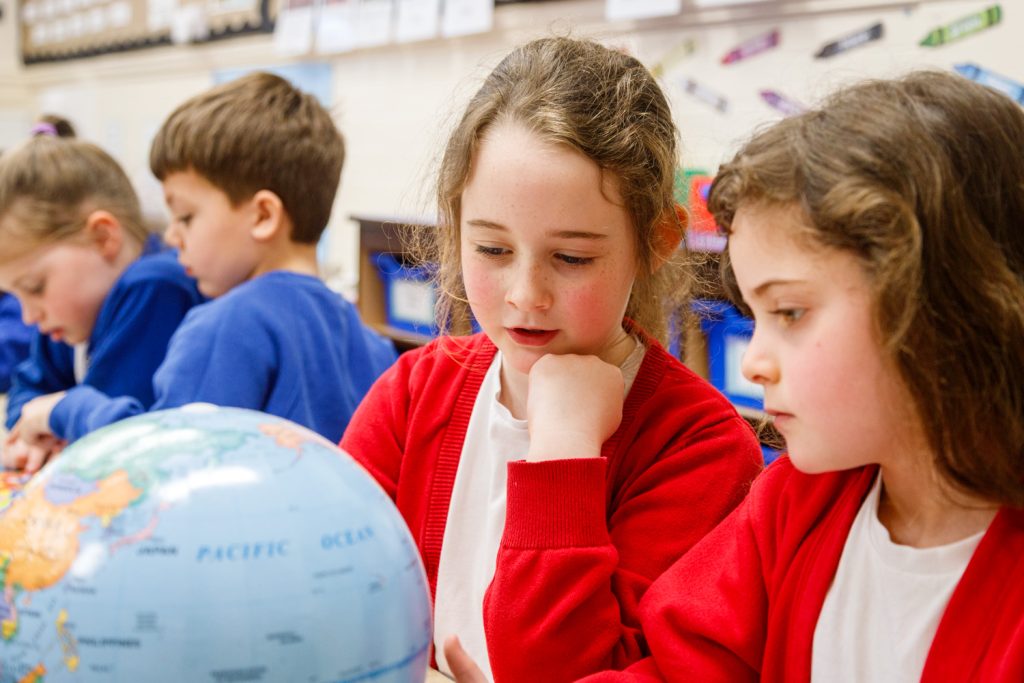
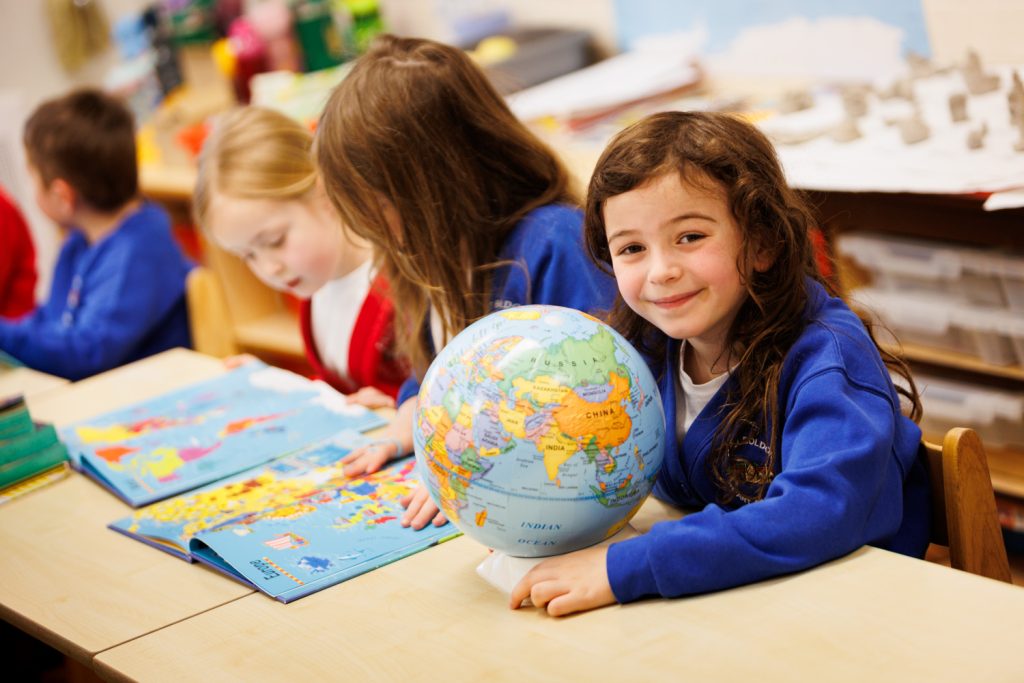
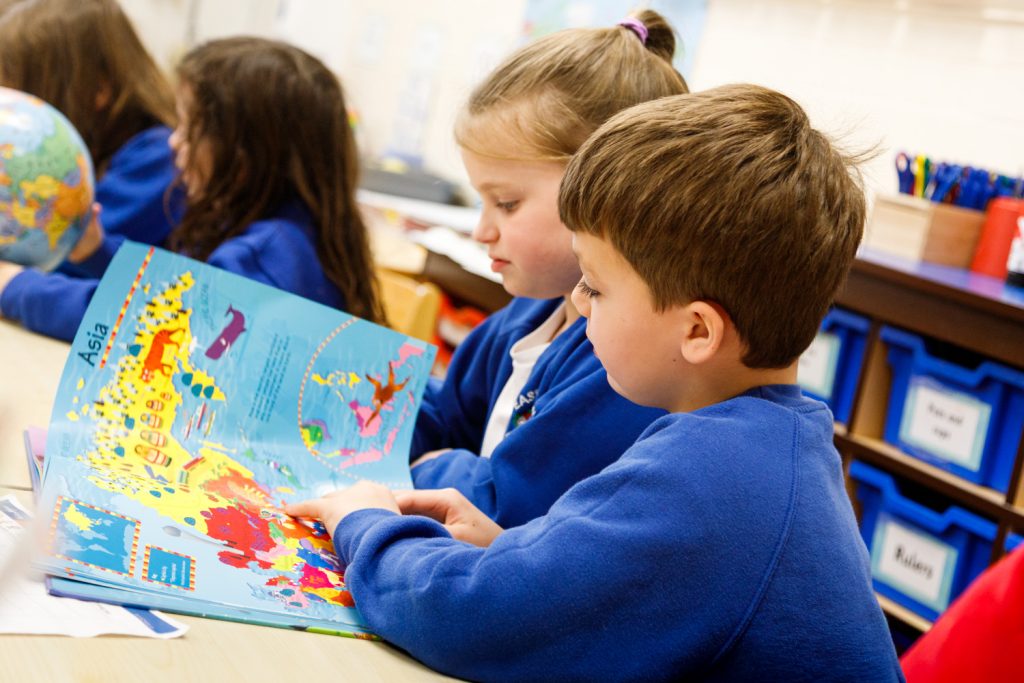
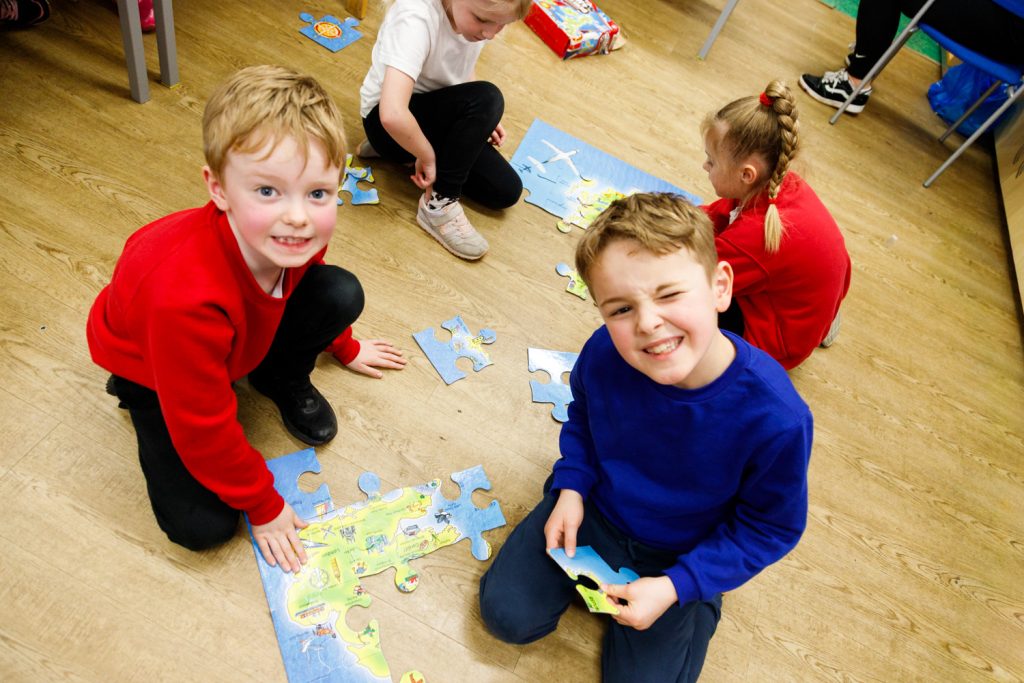
The study of Geography is to develop our children knowledge and understanding of places including their immediate environment and the wider world. It also allows children to look at the how people interact and affect environments.
Curriculum Intent
At the heart of everything we do at East Boldon Infant School is the belief that the children in our school should have the opportunity to learn through a rich curriculum that gives a wide range of first hand experiences and the opportunity to develop skills for life. In order to empower our children in their learning, we aim to provide a relevant curriculum that connects with their own experiences and interests and a curriculum that allows and encourages our children to be expressive in their approach to learning.
We believe that history and geography are so closely linked that they are best planned and taught jointly over a term. Both subjects help children understand similarities and differences between societies and cultures and the impact of changes on people and places. The use of careful research, evidence and school visits are also crucial in developing good knowledge and understanding which is an ideal forum for enriching and supporting other areas of the curriculum.
The fundamental aim of the study of history and geography is to help our pupils develop an understanding of their own lives and the world in which they live. This is achieved through the study of individuals, societies, cultures and the environment.
At East Boldon Infant School, the learning of humanities promotes:
- An understanding of the causes and consequences of change through physical and human actions and processes.
- Knowledge and understanding of people, cultures and events in a variety of places and at different times.
- Spiritual, moral, social and cultural development.
- A desire to be proactive local and global citizens.* Skills in questioning, formulating opinions and arguments, making judgements and carrying out investigations.
Curriculum Implementation
Geography:
- Knowledge and understanding of places. Pupils develop their sense of identity through learning about their locality and the wider world, including a non-European country.
- Knowledge and understanding of patterns and processes. Pupils recognise and explain selected physical and human processes including weather in contrasting locations.
- Knowledge and understanding of environmental relationships and issues. Pupils describe how people damage or improve the environment (sustainable development).
- Develop geographical skills and vocabulary necessary to carry out effective geographical enquiry.
History:
- Knowledge and understanding of chronology. Pupils recognise that the past can be divided into periods of time.
- Develop a range and depth of historical knowledge and understanding. Pupils develop factual knowledge of events, people and changes in the past. Interpretations of History- pupils identify with confidence the different ways in which the past is represented.
- Develop historical enquiry skills – Pupils study evidence, ask questions and solve problems.
The skill based curriculum is organised into half-termly Key Stage One topics. The choice of contexts in which the curriculum is delivered is designed to allow flexibility and places a strong emphasis on pupils starting points, interests and talents. This engenders creativity and allows children to express their understanding and responses to investigative and enquiry based learning in a unique and individual way, embracing preferred learning styles. The key knowledge and skills that the children acquire and develop through each topic have been mapped out to ensure progression and ensure depth of learning.
In Foundation Stage, history and geography are introduced as part of the Specific Area: Understanding The World. Each topic starts with a Prime Learning Challenge which is expressed as a question, for example; ‘Are toys today more exciting than toys from long ago?’ Observation of children’s interests and activities also informs planning and provision for this area of learning.
The children think about and explore their community, environment and the natural world through their topics. These are delivered in an active, creative and play-based way, utilising the outdoor and indoor classroom as well as using ICT as a tool for learning.
In Key Stage 1, planning is undertaken by the year 1 and year 2 planning teams. Detailed schemes of work have been compiled and will continue to ensure progression and breadth across year groups. Planning teams provide a framework for colleagues to share expertise and integrate exciting, effective and relevant learning opportunities across the curriculum for historical and geographical skills will be developed.
At East Boldon Infant School, the curriculum is taught using a cross-curricular approach. As part of our Learning Challenge Curriculum, each topic starts with a Prime Learning Challenge which is expressed as a question. At the beginning of each topic previous learning is referred to and for History, the class timeline is referred to, to support understanding. This also ensures that any gaps in learning can be addressed.
Thematic topics provide the basis for making meaningful links between the humanities subjects, whilst also allowing children to explore the subjects in isolation. To enhance the learning experience of our pupils, our humanities curriculum acknowledges and incorporates different style of learning. The knowledge, skills and understanding gained through the humanities curriculum is acquired through a variety of experiences. These include:
- Educational trips
- Themed Days
- Visits from people in the community
- Drama and Role-play – including visits from theatre companies
- The use of primary sources of information ( i.e. artefacts, photographs, maps…)
- Story telling
- Practical enquiry and research
- Discussions and debates
- Individual and group presentations
- The use of ICT
- Creative activities such as model making including handling wood, clay and textiles, sewing, cooking, ICT, painting and collage
- Developing enterprise skills through links with businesses in the local and wider community
Curriculum Impact
Ongoing assessments take place throughout the year. Teachers use this information to inform future lessons; ensuring children are supported and challenged appropriately. This data is analysed on a termly basis by the Subject Lead for History and Geography to inform and address any trends or gaps in attainment.
Children in Foundation Stage are assessed within Knowledge and Understanding of the world
and their progress is tracked termly using the Evidence Me tracker system. Age related expectation levels are reported to parents at the end of the reception year.
Across history and geography, staff will look at ways that the curriculum can be enhanced further. This may take the form of visits to the school or a visit out of school to support pupil’s learning in History and Geography.
Teachers will assess children’s work in history and geography by making informal judgements through observations during lessons. On completion of a piece of work, the teacher assesses it, and uses this assessment to plan for future learning. Written or verbal feedback is given to the child to help guide their progress.
Children are assessed at the end of each strand of work to determine progress against expected levels of achievement. We have sufficient resources for all history and geography teaching strands in school. We keep these in a central store, where there is a box of equipment for each strand.
Evidence Me may be used to evidence practical elements of the history and geography curriculum.
Monitoring of history and geography will be carried out in line with our monitoring programme for school. Monitoring will include:
- Lesson observations
- Scrutiny of children’s work and planning
- Tracking of pupil progress
- Use of Assessment Data
- Discussions with pupils – Pupil Voice
- Discussions with staff – Staff Voice
- Monitoring of subject development plans by subject leads
- Link governor visits
Monitoring will in particular include focus on:
Specific areas linked to the School Improvement Plan
- The lowest 20% of children
- The Pupil Premium children
- The SEND children
- Effective challenge
- Timely adapting to the needs of the children
- Effective use of resources
- Engagement and focus of the children
- Geography Pupil Voice.pub pub195.0 KbFeb 11th, 2025

- Geography Skills Progression.pub pub231.5 KbMay 1st, 2025
- History and Geography Curriculum Statement.doc doc99.5 KbApr 30th, 2025
- History and Geography Curriculum.docx docx91.9 KbMar 19th, 2025
- History Geography learning journey KS1.ppt ppt668.5 KbMar 19th, 2025