Curriculum Statement
At East Boldon Infant School we believe that RE both supports and strengthens what we do in every aspect of school life. Our caring ethos and the value which we place on the development of the whole child; spiritually, morally, socially, culturally and intellectually is reflected in the RE curriculum. Knowledge and understanding of other cultures and faiths helps to avoid misunderstandings and pre empts the likelihood of prejudice and conflict.
Curriculum Intent
We have designed our R.E curriculum with the intent that our children will become resilient, accepting, mindful and inquisitive learners. Our R.E curriculum allows children to discover and gain valuable insight into religions within the world that we live. The teaching of R.E is vital for children to understand other beliefs and make connections between their own values. It is our role to ensure that pupils are given the opportunity to be inquisitive by asking questions about the world around them and by allowing them to gain high quality experiences.
We aim to:
- Develop an awareness of spiritual and moral issues arising in their lives;
- Develop knowledge and understanding of major world religions and value systems found in Britain;
- Be able to reflect on their own experiences;
- Develop an understanding of religious traditions and to appreciate cultural differences in Britain today;
- Have respect for other people’s views and to celebrate diversity in society.
RE is based on three elements:
- Knowledge and Understanding of Religion
- Critical Thinking
- Personal Reflection
This is about what religion is and the impact it has for individuals and communities. It involves investigation and enquiry into the nature of religion and beliefs through the four concepts: Belief, Authority, Expressions of Belief, Impact of Belief.
Pupils will develop their knowledge and understanding of individual religions and distinctive religious traditions and apply this to considering ways in which religions are similar to and different from each other.
We promote critical thinking which enables pupils to be open minded and to value different types of reasoning. It enables children to give their own views and opinions in simple forms. It also develops pupils’ ability to reflect on religion in relation to their own beliefs, values and experiences and the influence of these on their daily life, attitudes and actions. For example when learning about the story of Rama and Sita and how this tells Hindus that good triumphs over bad, pupils are asked to think about other stories that illustrate this theme and events and experiences in their own lives where good triumphs over bad.
Curriculum Implementation
We use the agreed syllabus for Religious Education developed by South Tyneside LA. The core religions studied in Key Stage 1 are Christianity and Judaism. This can also be supplemented by an additional religion – Buddhism, Hinduism, Islam or Sikhism. R.E is taught weekly with a new learning challenge question being introduced each half term.
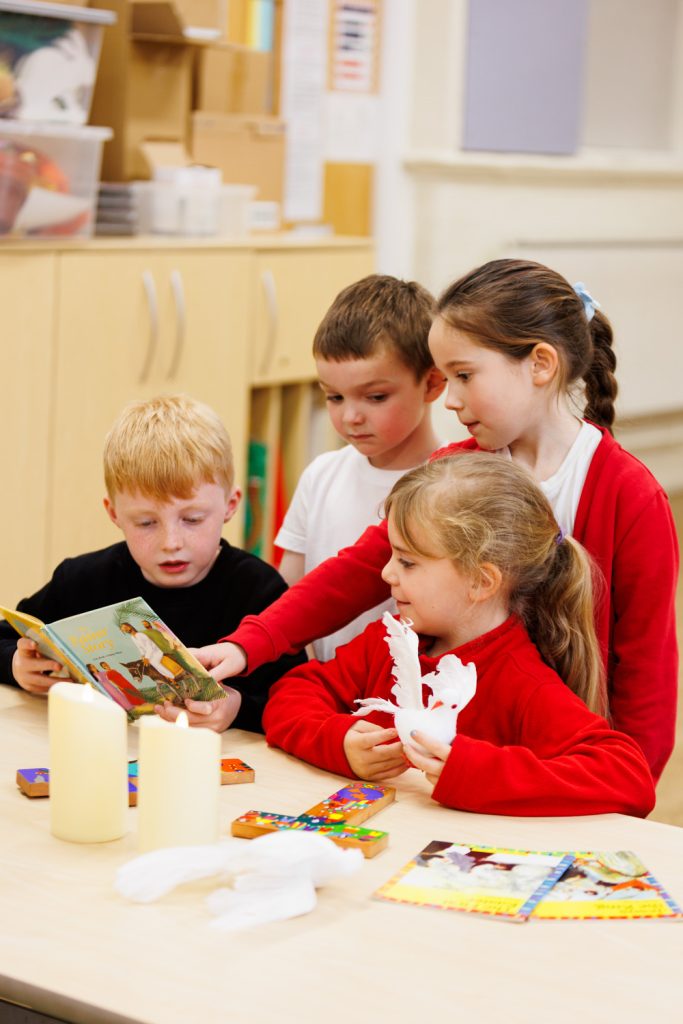
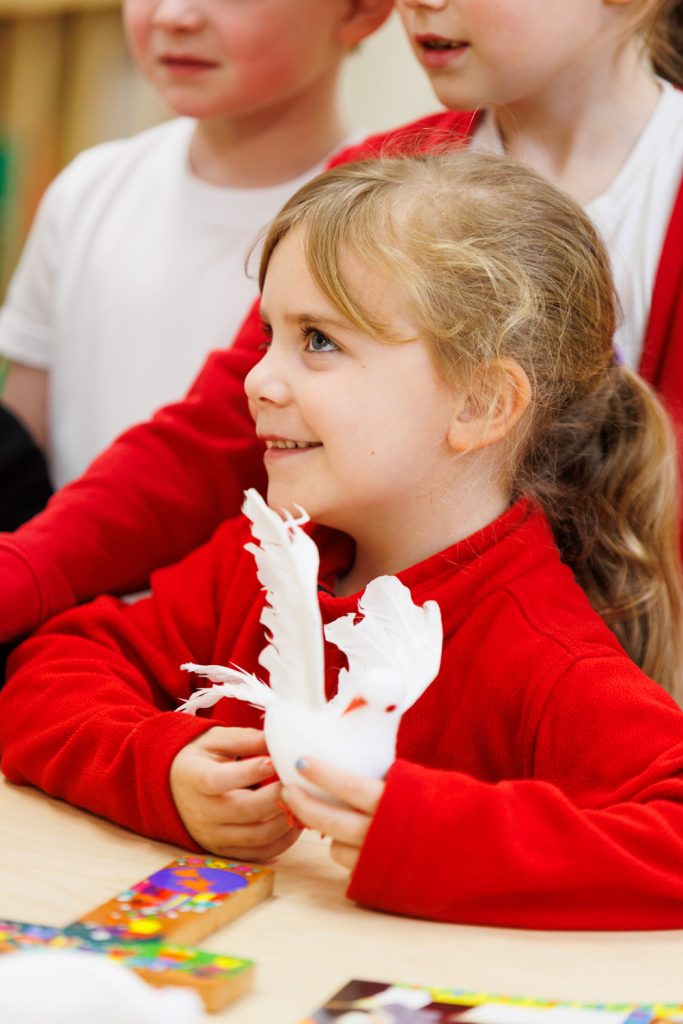
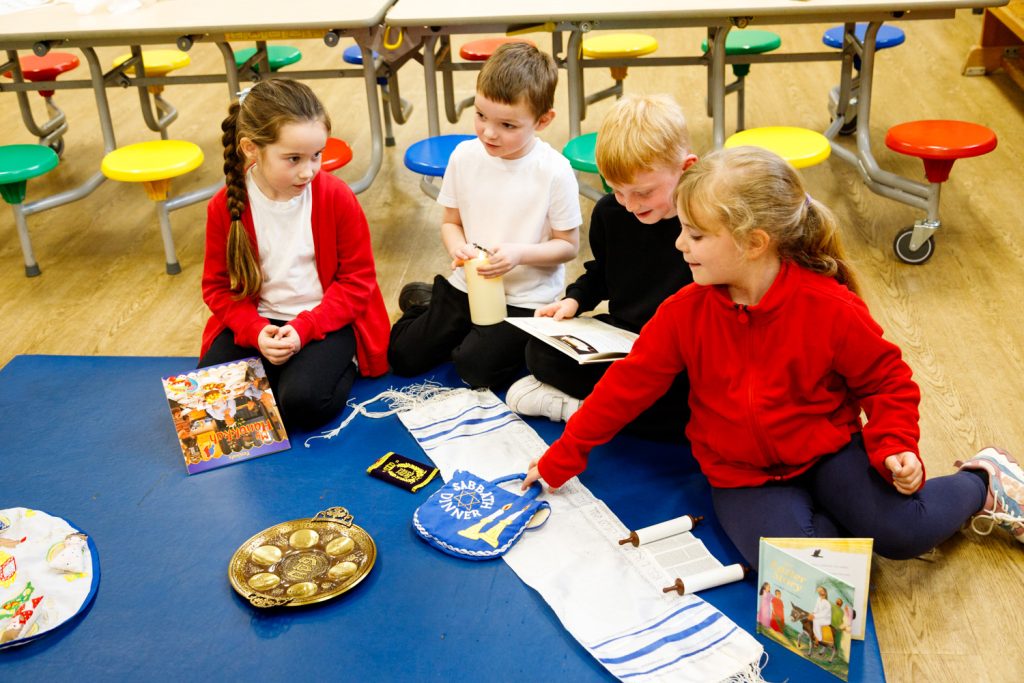
The teaching of RE will involve some direct teaching and whole class, group, paired and individual activities. A range of teaching styles will be adopted including enquiry, exploration, discussion, drama using a range of sources including ICT, works of art, artefacts, visits and visitors.
The Learning Challenge Curriculum approach has been adopted to the teaching of RE. Every half term the children are introduced to a new topic presented as a learning challenge question. The topics covered are taken from the agreed syllabus.
Religious Education is taught to all children, including those in Reception. We relate religious education aspects of the children’s work to the objectives from Developments Matters including children talking about past and present events in their own lives and in the lives of family members, knowing about similarities between themselves and others among families, communities and traditions.
We try to ensure all our subjects have cross curricular links to other subjects. RE makes links with several subjects including English, through promoting skills of reading, writing, speaking and listening. There may be use of texts within class that has a religious theme or content, which encourages discussion. Children may also be asked to write letters/diaries and record information in order to develop writing ability.
Other links are made to PHSCE through teaching children about the values and moral beliefs that underpin individual choices of behaviour. We also promote the values and attitudes required for citizenship in a democracy by teaching respect for others and the need for personal responsibility. In general, by promoting tolerance and understanding of other people, we enable children to appreciate what it means to be to be positive members in a diverse society.
Links to ICT could also be made when the children use the Internet to research topics. Class programs could be used for word processing or paintings linked to work being carried out. Children could also access cameras or IPads to help them to record visits i.e on a recent visit to our local church.
Resources for RE are kept in a central store where there are topic boxes and books to access.
Curriculum Impact
At East Boldon Infant School, we seek to ensure that all pupils in our school are educated to develop spiritually, academically, emotionally and morally to enable them to better understand themselves and others and to cope with the opportunities, challenges and responsibilities of living in a rapidly changing, multicultural world.
Regular assemblies and celebrations of work taught and learnt during each year group’s topics will help to celebrate the diversity of the school community and promote positive images of people in the wider community, including their beliefs, traditions, culture, language and history.
The agreed syllabus sets out a structure for recognising pupils achievements and each pupil can work progressively towards the statements. Assessment in RE is seen in its broadest sense and is not limited to testing and measuring. At the heart of religious education is spiritual truth, values, attitudes of wonder and respect.
Children demonstrate their ability in RE through a variety of different ways. Younger children may act out events such as a Bible story, whilst older children may write about the event or produce a presentation based on their investigations. Teachers will use ongoing assessments, making informal judgements as they observe in lessons. Formal assessments will be completed termly and information is passed to the next teacher at the end of the year.
Monitoring of RE will be carried out in line with our monitoring programme for school, but taking into account the above. Monitoring will include:
- Lesson observations
- Scrutiny of children’s work and planning
- Tracking of pupil progress
- Use of Assessment Data
- Discussions with pupils – Pupil Voice
- Discussions with staff – Staff Voice
- Monitoring of subject development plans by subject leads
- Link governor visits
Monitoring will in particular include focus on:
- Specific areas linked to the School Improvement Plan
- The lowest 20% of children
- The Pupil Premium children
- The SEND children
- Effective challenge
- Timely adapting to the needs of the children
- Effective use of resources
- Engagement and focus of the children