Curriculum Statement
At East Boldon Infant School, Art and Design is seen as a fundamental part of school life. We are committed to providing a rich Art and Design curriculum for our children and we believe by developing this we can contribute to the wider development of our children. Art and Design enables children to express themselves, to be creative and to learn about their own and other cultures and communities. We see Art and Design as a means to support learning in a range of ways; skills developed in Art and Design can be transferred across the curriculum to support learning in school and beyond.
We aim to provide a high quality Art and Design curriculum which will inspire and challenge our pupils by:
- Providing pupils with the cultural capital they need to succeed now and in the future.
- Equipping them with the knowledge and skills to experiment, invent and create their own works of art and design.
- Enable them to think critically and develop a deeper understanding of art and design.
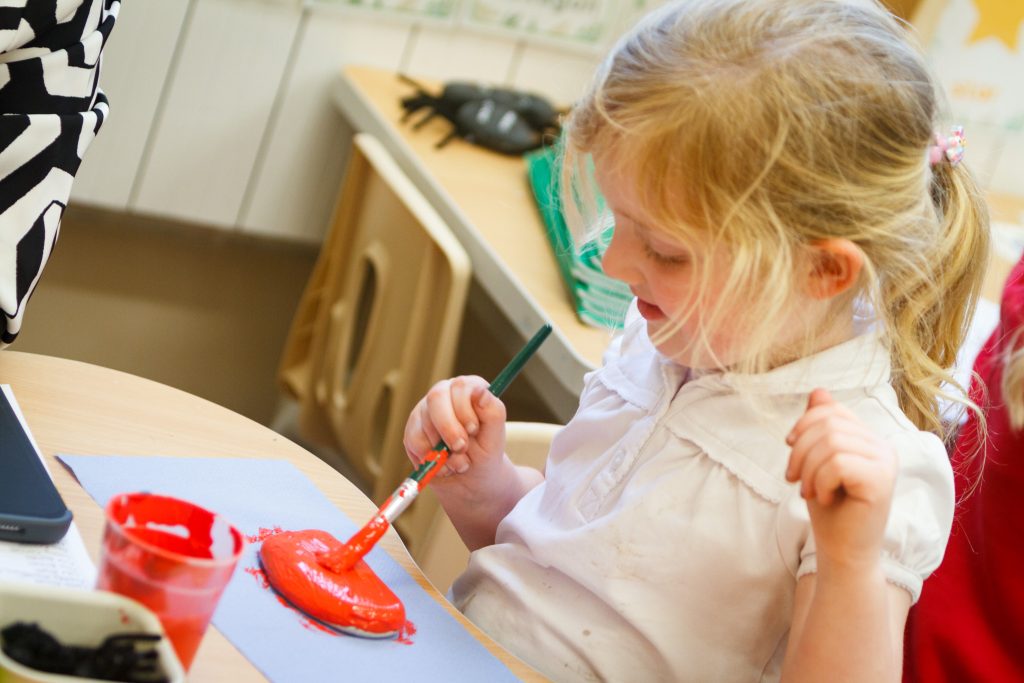
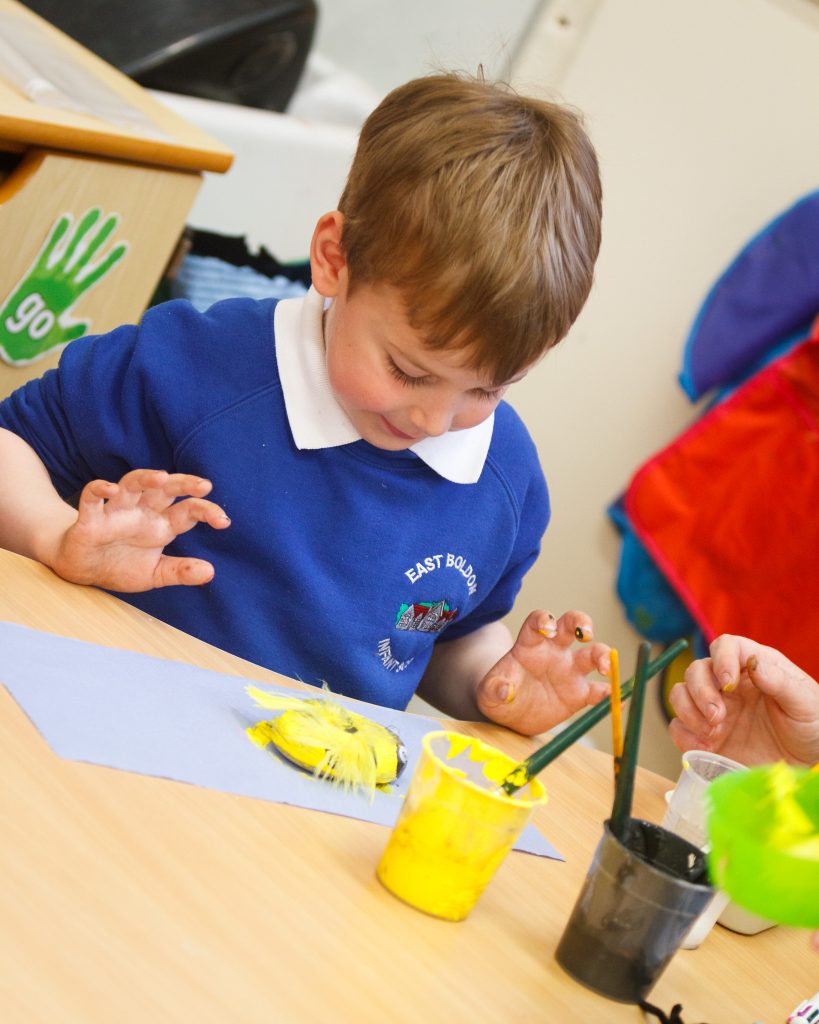
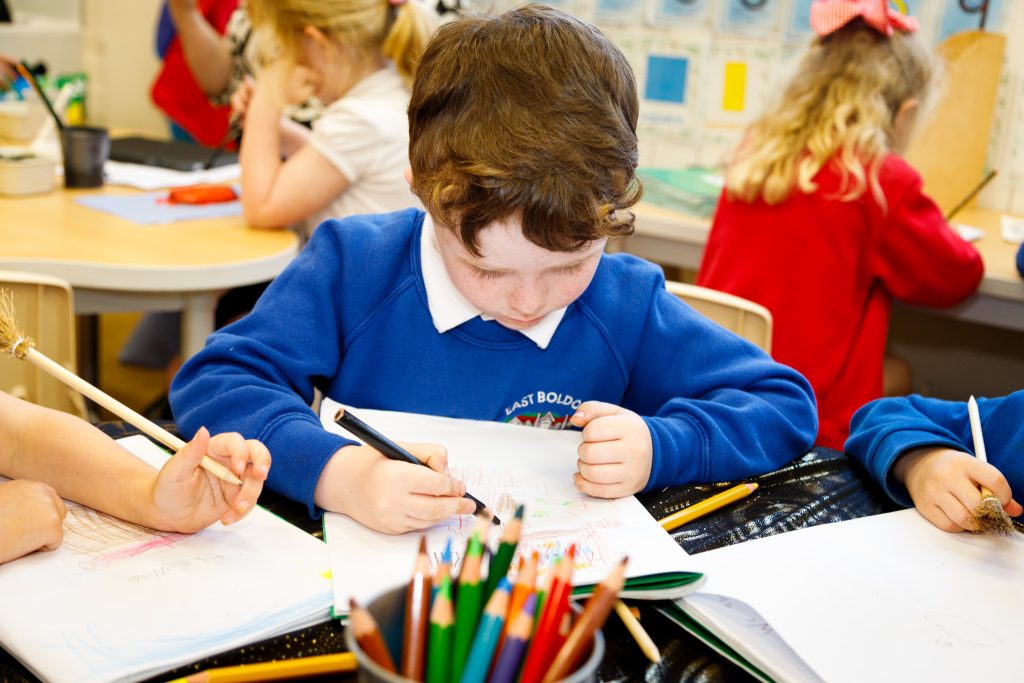
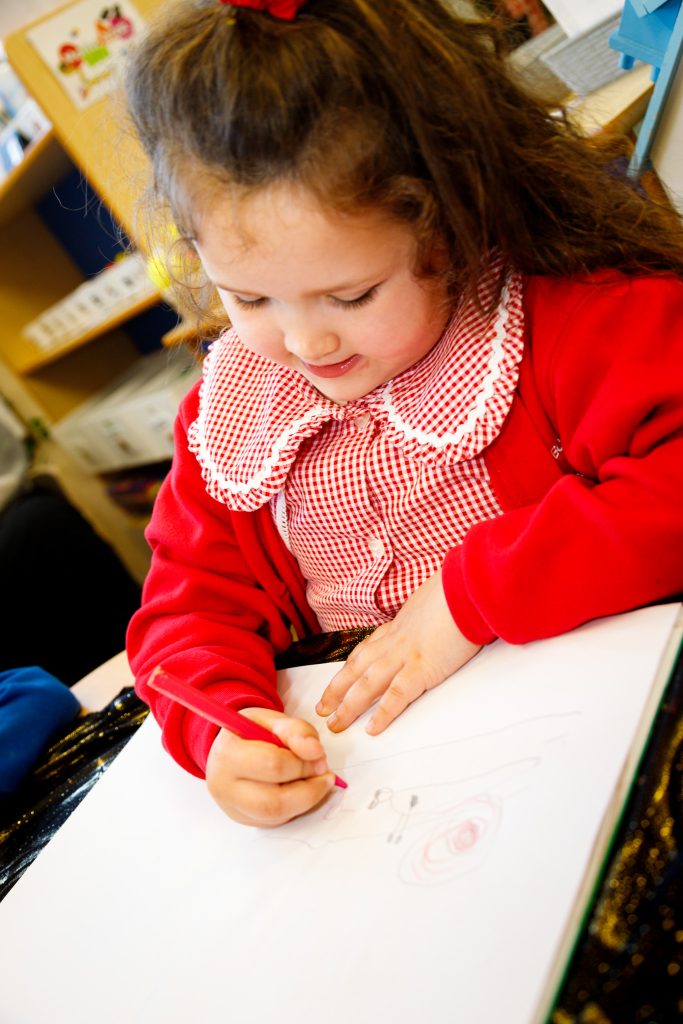
- Teaching the skills of drawing, painting, printing, collage, textiles, digital art and providing them with opportunities to explore and evaluate different creative ideas.
- Introduce them to a range of work and artists and develop their understanding of their historical/cultural influences.
- Develop knowledge of the styles and their use of vocabulary to enable them to discuss and appreciate the work they have seen.
Curriculum Intent
We believe that Art and Design is a vital part of the education of all children. Our staff are committed to providing all children with learning opportunities to engage in Art and Design. The children’s use and understanding of the visual language of art needs to be developed by effective teaching and by a considered sequence of experiences. The school’s intention is to provide an Art and Design curriculum which will enable each child to reach their full potential in learning through investigating and making, through research and the development of skills and through their evaluation of their own art and that made by others.
A high quality art and design education should engage, inspire and challenge pupils, equipping them with the knowledge and skills to experiment, invent and create their own works art, craft and design.
Curriculum Implementation
We use a Learning Challenge approach towards our curriculum planning in all foundation subject. Where possible we endeavour to link our class projects with the current Art and Design topic, whilst ensuring progression of skills. Each topic starts with a Prime Learning Challenge which is expressed as a question. All year groups have a breakdown of knowledge, skills and understanding to be taught for each subject and this ensures that progression is built upon from the previous year’s learning so that there is an increasing challenge for the children as they move through the school. We start all new learning challenges with a pre- learning task to assess children’s prior knowledge before planning any subsidiary learning tasks. This also ensures that any gaps in learning can be addressed. The subsidiary learning tasks are also expressed as questions. The subject leader is responsible for reviewing these plans.
To achieve that aim the school plans a range of activities in art which provide opportunities, as required by the National Curriculum for pupils in Key Stage 1 to:
- To use a range of materials creatively to design and make products
- To use drawing, painting and sculpture to develop and share their ideas, experiences and imagination
- To develop a wide range of art and design techniques in using colour, pattern, texture, line, shape, form and space
- About the work of a range of artists, craft makers and designers, describing the differences and similarities between different practices and disciplines, and making links to their own work.
Our creative cross curricular approach to the curriculum, encourages children to use art and design for a variety of purposes and children’s enjoyment of the visual arts enhances and enriches their everyday lives.
Within the Reception year, the teaching of Art and Design is through the Expressive Arts and Design element of the curriculum. Within this, pupils explore and use a variety of media and materials through a combination of child initiated and adult directed activities both indoors and outdoors. They have opportunities to learn to:
- Explore the textures, movement, feel and look of different media and materials
- Respond to a range of media and materials, develop their understanding of them in order to manipulate and create different effects.
- Use different media and materials to express their own ideas
- Explore colour and use for a particular purpose
- Develop skills to use simple tools and techniques competently and appropriately
- Select appropriate media and techniques and adapt their work where necessary
The outcomes of the curriculum are measured by the attainment and progress made by the children assessing how much the children know and remember including whether or not the children have mastered a particular skill.
Staff refer to prior learning and experiences and planning takes previous learning into consideration to ensure next steps are carefully planned and skills are developed.
Curriculum Impact
Ongoing assessments take place throughout the year. Teachers use this information to inform future lessons; ensuring children are supported and challenged appropriately. This data is analysed on a termly basis by the Subject Lead for Art and Design to inform and address any trends or gaps in attainment.
Children in Foundation Stage are assessed within Expressive Arts and Design and their progress is tracked termly using the Evidence Me tracker system. Age related expectation levels are reported to parents at the end of the reception year.
Across Art and Design staff will look at ways that the curriculum can be enhanced further. This may take the form of visits to the school by artists or craftspeople, or a visit out of school perhaps to a gallery in order to support pupil’s learning in art.
We often use Art Clubs as an After School provision to enrich the school curriculum further.
Monitoring of Art will be carried out in line with our monitoring programme for school. Monitoring will include:
- Lesson observations
- Scrutiny of children’s work and planning
- Tracking of pupil progress
- Use of Assessment Data
- Discussions with pupils – Pupil Voice
- Discussions with staff – Staff Voice
- Monitoring of subject development plans by subject leads
- Link governor visits
Monitoring will in particular include focus on:
- Specific areas linked to the School Improvement Plan
- The lowest 20% of children
- The Pupil Premium children
- The SEND children
- Effective challenge
- Timely adapting to the needs of the children
- Effective use of resources
- Engagement and focus of the children