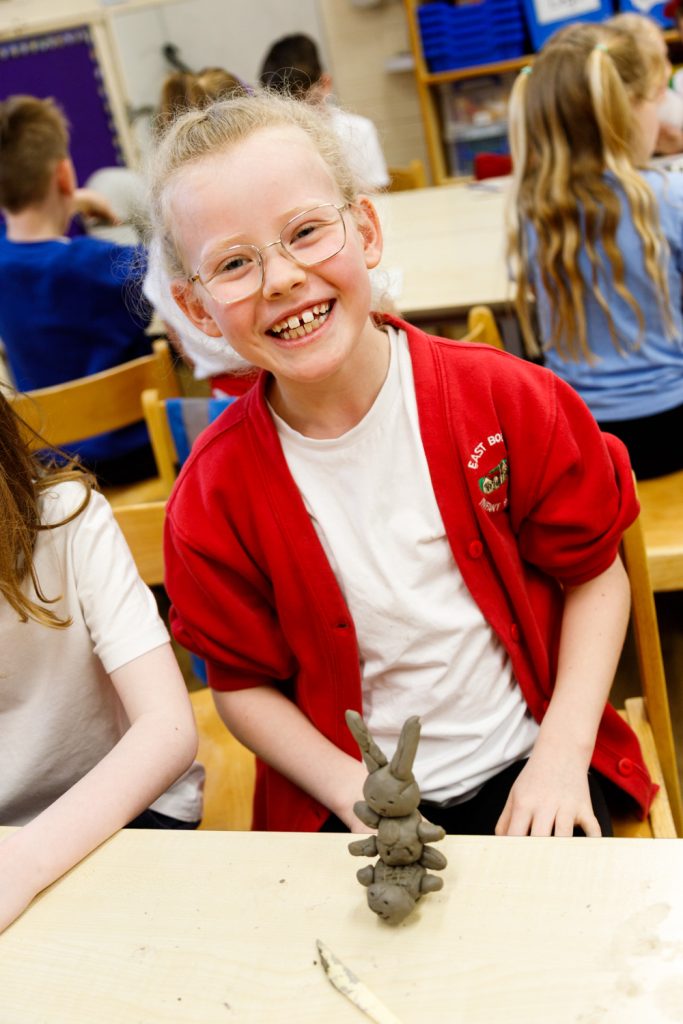
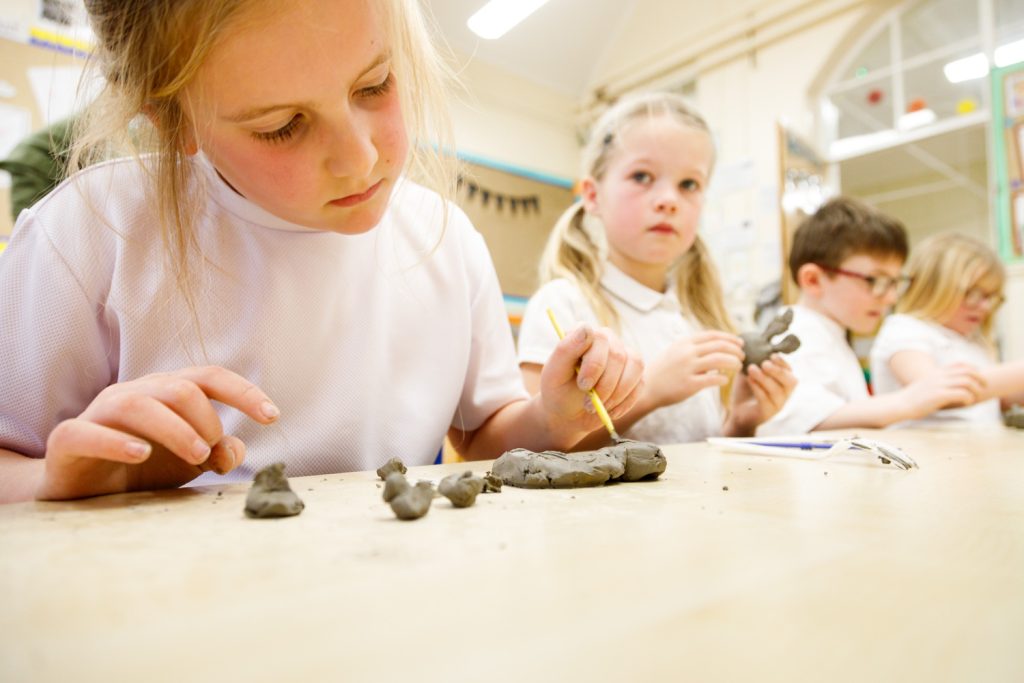
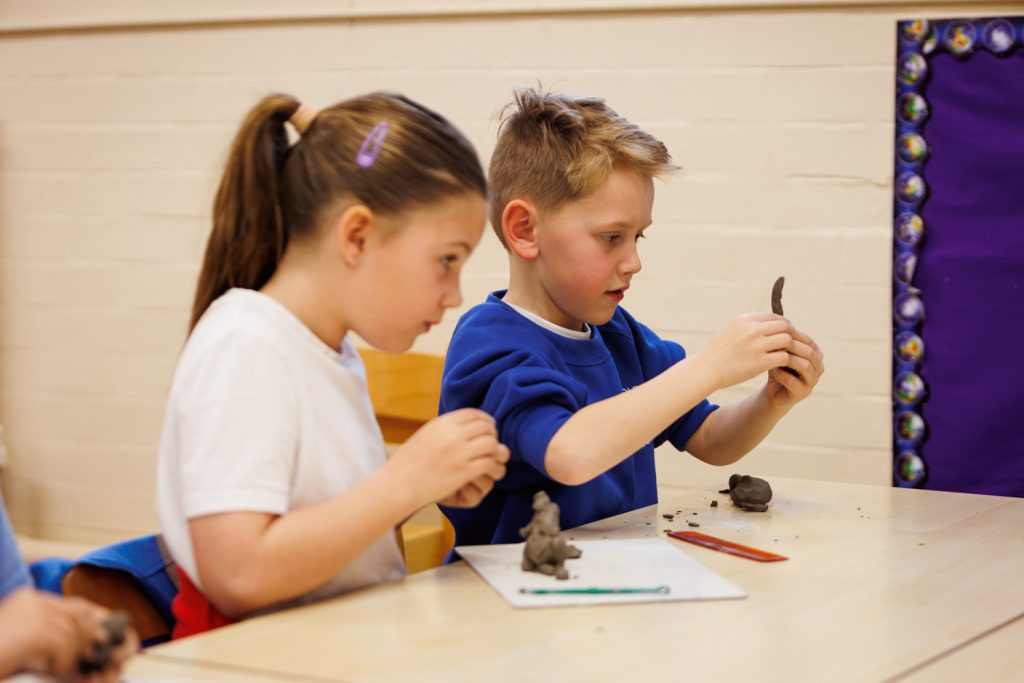
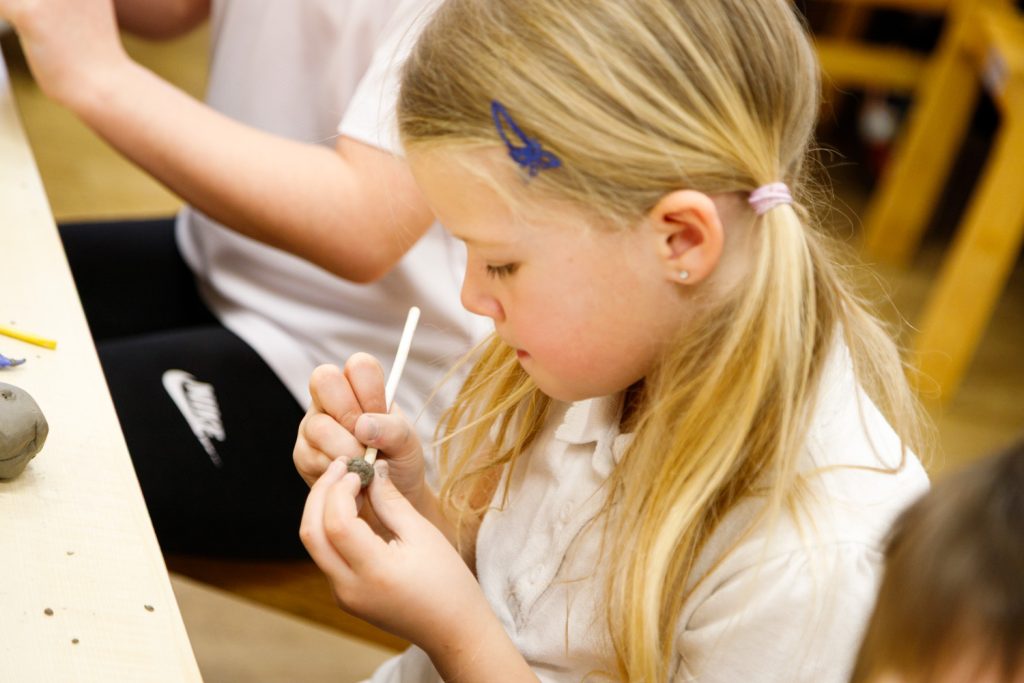
At East Boldon Infant School, Design and Technology is recognized as an intricate part of our day to day lives. It is therefore important that our children are taught how this subject is of great importance in our rapidly changing world. 

Children are encouraged to think creatively in order to solve problems and/or make improvements to existing ideas and products. It is through these methods that they can make positive changes to their own and others’ lives. The teaching of Design and Technology enables children to identify needs and opportunities, and to respond by developing ideas and eventually making products and systems. Through the study of design and technology, they combine practical skills with an understanding of aesthetic, social and environmental issues, as well as of functions and industrial practices. This allows them to reflect on and evaluate present and past design and technology, its uses and impacts. Design and technology gives the children the opportunity to work and think both as individuals and as part of a team, which helps them develop and learn while demonstrating our key values of the school.

Curriculum Intent

We aim to provide a high quality Design and Technolgy Curriculum which will inspire and challenge our pupils by:

  • Developing the creative, technical and practical expertise needed to perform everyday tasks confidently and to participate successfully in an increasingly technological world
  • Building and applying a repertoire of knowledge, understanding and skills in order to design and make high-quality prototypes and products for a wide range of users
  • Critique, evaluate and test their ideas and products and the work of others
  • Understand and apply the principles of nutrition and learn how to cook.
  • Engage the interests of all children and help sustain their motivation and enjoyment of learning
  • Maintain and develop the confidence and ability of all children to solve technological problems
  • Help develop the social skills necessary to work as a member of a team, as well as the ability to work independently when the situation demands
  • Stimulate curiosity, imagination and creativity
  • Promoting the ability to communicate ideas and information through a variety of media
  • Developing an appreciation of the importance of quality
  • Developing the ability to identify safety hazards and risks and take appropriate action
  • Providing the opportunity to design for, and consider the needs of other people.

We use a Learning Challenge approach towards our curriculum planning in all foundation subject.  Where possible we endeavour to link our class projects with the current Design and Technology topic, whilst ensuring progression of skills.  Each topic starts with a Prime Learning Challenge which is expressed as a question. All year groups have a breakdown of knowledge, skills and understanding to be taught for each subject and this ensures that progression is built upon from the previous year’s learning so that there is an increasing challenge for the children as they move through the school. We start all new learning challenges with a pre- learning task to assess children’s prior knowledge before planning any subsidiary learning tasks. This also ensures that any gaps in learning can be addressed. The subsidiary learning tasks are also expressed as questions. The subject leader is responsible for reviewing these plans.

Design and Technology lessons involve a combination of whole class, group and individual teaching. The learning opportunities can be divided into five main areas.

Design

Make

Evaluate

Technical Knowledge

Cooking and Nutrition

We use a skills and topic based creative curriculum. Staff utilise the objectives as outlined in the New Curriculum as a basis for planning.

Within Key Stage 1, a variety of creative and practical activities will provide the children with the knowledge, skills and understanding to:

Design

  • Design purposeful, functional, appealing products for themselves and other users based on design criteria
  • Generate, develop, model and communicate their ideas through talking, drawing, templates, mock-ups and, where appropriate, information and communication technology

Make

  • Select from and use a range of tools and equipment to perform practical tasks [for example, cutting, shaping, joining and finishing]
  • Select from and use a wide range of materials and components, including construction materials, textiles and ingredients, according to their characteristics

Evaluate

  • Explore and evaluate a range of existing products
  • Evaluate their ideas and products against design criteria

Technical knowledge

  • Build structures, exploring how they can be made stronger, stiffer and more stable
  • Explore and use mechanisms [for example, levers, sliders, wheels and axles], in their products.

Cooking and Nutrition

  • Use the basic principles of a healthy and varied diet to prepare dishes
  • Understand where food comes from.

Health and Safety

When completing Design and Technology tasks and projects:

  • Children should be given suitable instruction on the operation of all equipment before being allowed to work with it.
  • Children should be strictly supervised in their use of equipment at all times.
  • Children should be taught to respect the equipment they are using and to keep it stored safely while not in use.
  • Children should be taught to recognise and consider hazards and risks and to take action to control these risks, having followed simple instructions.

Early Years Foundation Stage (EYFS)

In our EYFS classrooms, the children’s experiences provide firm foundations for later work in design and technology within the school. These experiences include: asking questions about how the world around them works, investigating and using a variety of construction kits, materials, tools and products, developing making skills and handling tools safely and with increasing control. These experiences, both indoors and outdoors, engage the children’s natural curiosity.

Children learn how to take risks, becoming resourceful, innovative learners. Through the 

The impact of our Design and Technology curriculum will be based on teacher observations within weekly sessions using Assessment for Learning and made at the end of each unit. 

Ongoing assessments take place throughout the year. Teachers use this information to inform future lessons; ensuring children are supported and challenged appropriately. This data is analysed on a termly basis by the Subject Lead for Art and Design to inform and address any trends or gaps in attainment.

Children in Foundation Stage are assessed within Expressive Arts and Design as well as Physical Development and their progress is tracked termly using the Evidence Me tracker system. Age related expectation levels are reported to parents at the end of the reception year.

Across Design Technology staff will look at ways that the curriculum can be enhanced further. This may take the form of visits to the school by artists or craftspeople, or a visit out of school perhaps to a gallery in order to support pupil’s learning in art.

We often use Lego Clubs and Fun Foodies as an After School provision to enrich the school curriculum further.

Teachers will assess children’s work in Design Technology by making informal judgements through observations during lessons. On completion of a piece of work, the teacher assesses it, and uses this assessment to plan for future learning. Written or verbal feedback is given to the child to help guide his/her progress.  

Children are assessed at the end of each strand of work to determine progress against expected levels of achievement.  We have sufficient resources for all design technology teaching strands in school.

Evidence Me may be used to evidence practical elements of the Design Technology curriculum

Monitoring of Design Technology will be carried out in line with our monitoring programme for school. Monitoring will include:

  • Lesson observations 
  • Scrutiny of children’s work and planning 
  • Tracking of pupil progress 
  • Use of Assessment Data
  • Discussions with pupils – Pupil Voice
  • Discussions with staff – Staff Voice
  • Monitoring of subject development plans by subject leads
  • Link governor visits 

Monitoring will in particular include focus on:

  • The lowest 20% of children
  • The Pupil Premium children
  • The SEND children
  • Effective challenge
  • Timely adapting to the needs of the children
  • Effective use of resources
  • Engagement and focus of the children
  • Specific areas linked to the School Improvement Plan

Children are encouraged, to evaluate their own work and describe what they might change if they were to revisit the activity.